Map Vocabulary for Kids
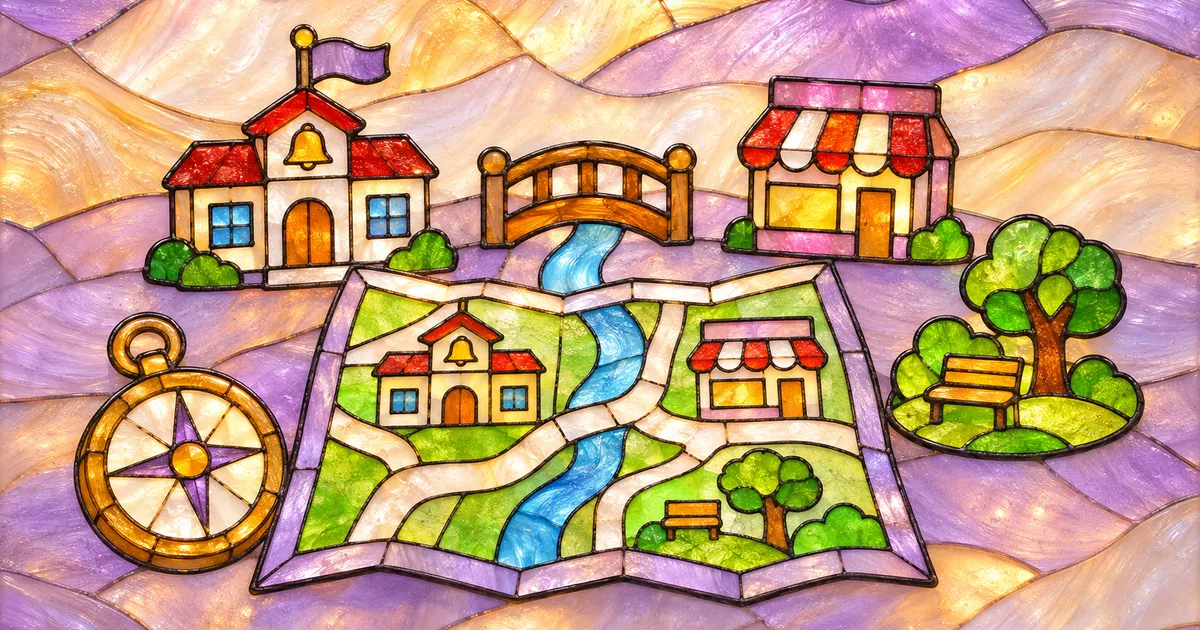
Map Vocabulary for Kids: Words and Activities for Children covers place, direction, feature, and navigation words for reading and describing maps. Start with familiar places: home, school, park, and shop. Add position words, compass points, and short directions. Children can learn each term by finding it on a map, saying it in a sentence, and using it to describe a place. The activities work with hand-drawn, printed, or digital maps.
Core Map Words and Phrases
Begin with nouns children can picture. A map represents a place; a globe represents the round Earth. A symbol marks something on the map, and a legend explains the symbols.
Teach Map Vocabulary for Kids: Words and Activities for Children in connected groups. Introduce map, symbol, and legend together. Later, combine road, bridge, river, and cross. Children remember words by solving tasks: “Find the bridge” or “Which symbol shows the station?”
Map word myths and facts
Myth: Children must learn the four compass points before using a map.
Fact: Young learners can begin with left, right, near, and next to.
Myth: Up always means north.
Fact: The compass or direction marker shows the map’s position.
Using Map Words in Context
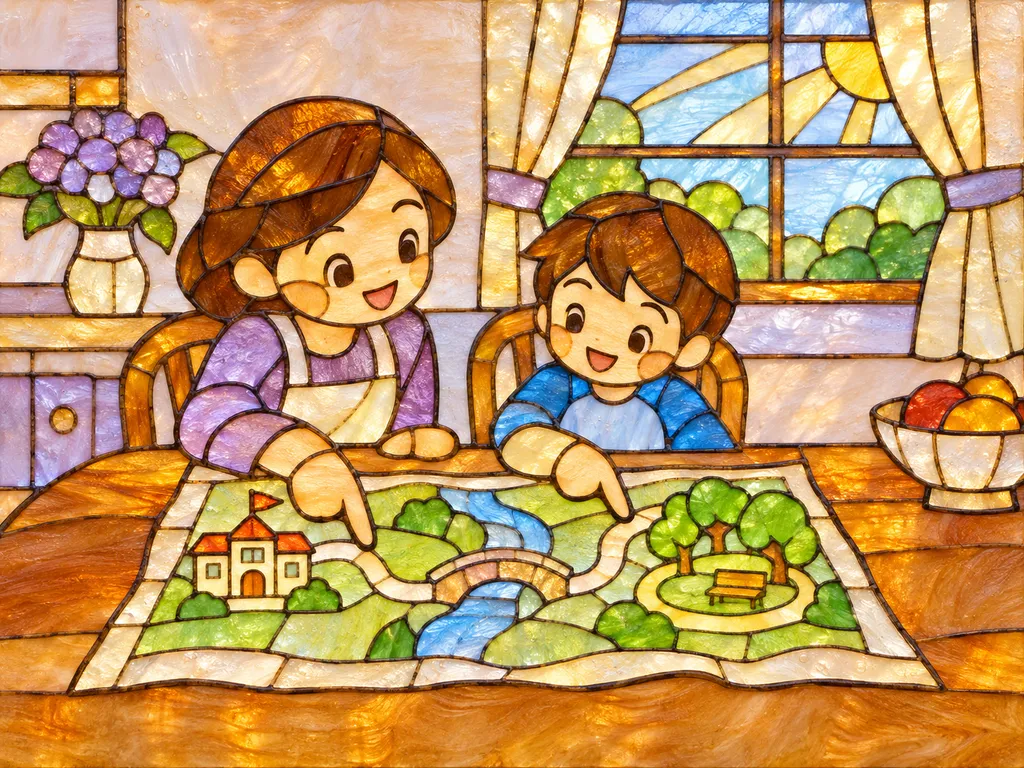
Words need sentence frames that show their purpose. Start with short patterns: “The park is near the school.” “The river is east of the town.” “Turn left at the bridge.”
Map Vocabulary for Kids: Words and Activities for Children becomes practical when children practise questions with answers. Ask “Where is the library?” before expecting “The library is opposite the station.” Ask “How do we get to the park?” before requesting longer directions.
After teaching the pattern, change one part at a time. Replace park with shop, then near with opposite. The child can focus on each new detail without facing a different sentence structure.
Quick teaching tip
Point to each place while saying the sentence. Pause and let your child point before speaking.
Activities for Different Ages
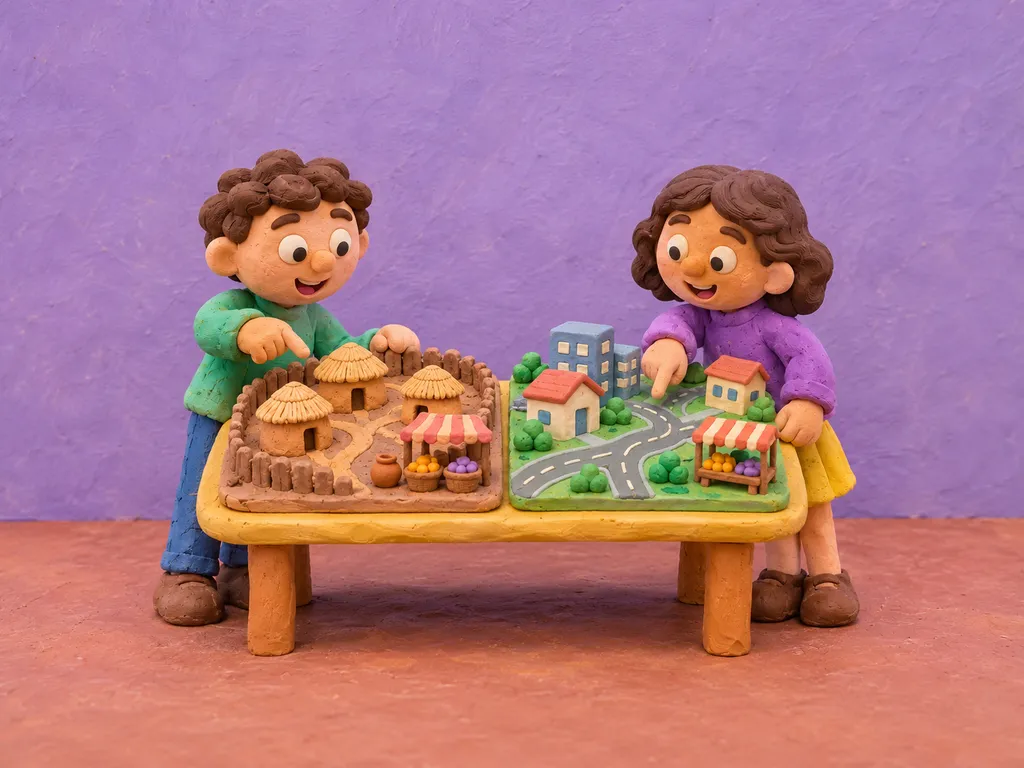
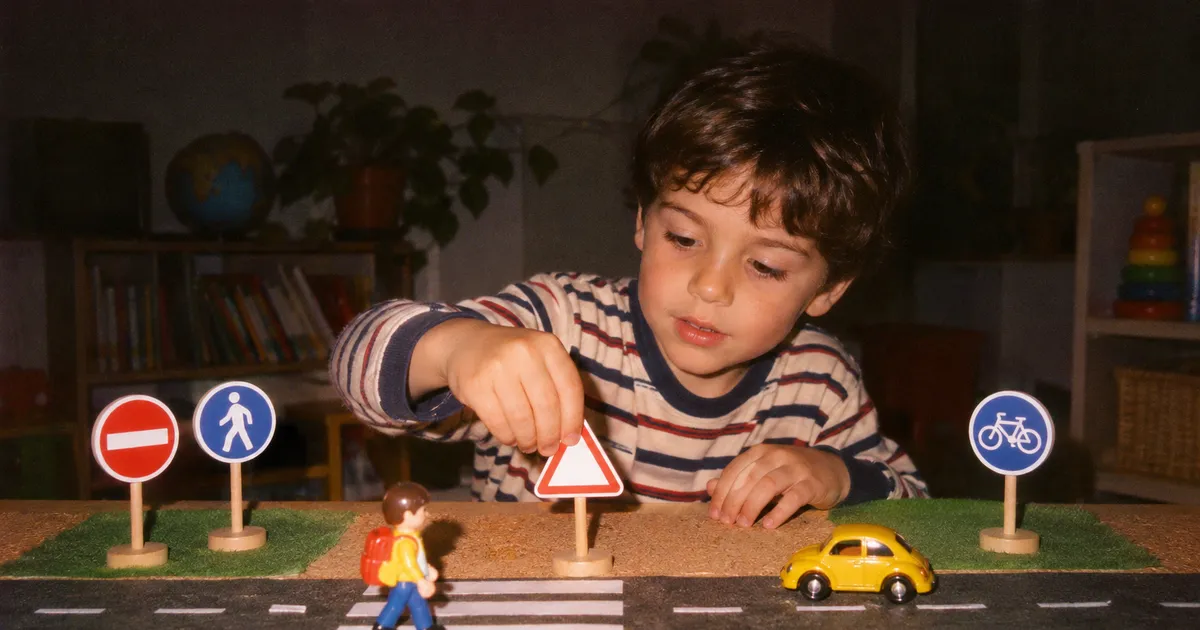
For school-age kids, draw a small neighbourhood with a home, school, park, road, and river. Give one instruction at a time: “Point to the river,” “Put a toy next to the school,” or “Move the car across the bridge.” Movement gives each word visible meaning.
For ages 8–10, try a treasure-map task. Your child can add a forest, mountain, cave, path, and island, then write clues: “Start at the beach. Go north. Turn left at the forest.” Swap roles so the child reads and checks your directions.
For school-age kids, use a town or public transport map. Ask the learner to compare two routes, explain a change of direction, and choose a meeting point. Older learners can give reasons: “The way through the park is shorter, but the path past the station is easier to follow.”
Activity checklist
- Choose five to eight target words.
- Show every word on the map.
- Model one complete sentence.
- Let your child give a direction.
- Repeat difficult words in a new route.
Short Practice Ideas for Home
A five-minute routine supports one focused round. Review three known words, add one new word, and finish with a direction combining them. Map Vocabulary for Kids: Words and Activities for Children should feel like communication, not a spelling test.
In a multilingual family, children may connect a map idea with another language first. Accept the link, then model the English phrase: “Yes, a bridge. The bridge crosses the river.” The goal is accurate English without hiding the child’s other languages.
Build and Follow a Mini Route
Draw a house in the centre of a page. Add a park to the north, a school to the west, and a river to the east. Draw one bridge across the river. Give three instructions: “Start at the house. Go east to the river. Cross the bridge.” Then let your child create a new path for you.
Reuse the map another day. Change the task: hide a place, add a symbol, describe a wrong path, or ask the child to correct your directions. During LearnLink lessons, our tutors can adjust map tasks to the learner’s age and speaking confidence.
Common Mistakes and Simple Fixes
Teaching isolated nouns limits progress. A child may name river, school, and bridge but remain unable to explain their positions. Pair each noun with a position or action: “The bridge is over the river” or “Cross the bridge.”
Children may confuse left with right or east with west. Skip long corrections. Return the map to its original position, point to the direction marker, and repeat the sentence. For left and right, let the child trace the route while speaking.
Do not demand perfect spelling before conversation. In Map Vocabulary for Kids: Words and Activities for Children, spoken directions, map reading, and written labels develop different skills. Correct one error, then ask the child to repeat the complete phrase.
- Point to three map symbols and ask your child to name each one.
- Compare two routes and describe turns using left, right, straight, and past.
- Correct one mistaken direction by tracing the route slowly with a finger.
- Match four location words to places on a familiar neighborhood map.
- Finish by letting your child explain one route in complete sentences.
When a word has several meanings or pronunciations, Cambridge Dictionary is a useful check before turning it into child-friendly examples.
Frequently Asked Questions
How Many Map Words Should My Child Learn at Once?
Start with five to eight connected words, adjusting the number to your child’s age and attention. Map Vocabulary for Kids: Words and Activities for Children works best when each word appears in a picture, sentence, and task. Following “Turn left at the bridge” shows more usable language than reciting a longer list without context.
Should Children Learn Compass Points or Left and Right First?
Young children can begin with left, right, near, next to, and between because the words apply to daily life and maps. Add north, south, east, and west when your child understands the direction marker. Older children can learn both sets together and compare them in spoken directions.
Can My Child Use Map Vocabulary in More than One Language?
Yes. A child may connect a place or direction with several languages. Keep the English model consistent without treating another language as an error. Once the idea is understood, request a complete English phrase: “The station is south of the park.” This develops accurate English while respecting the child’s language knowledge.
What Kind of Map Is Easiest for a Beginner?
A hand-drawn map of familiar places offers an accessible starting point. Include a few distinct symbols and enough space to trace a route. After your child can locate places and follow short directions, introduce a neighbourhood, town, transport, or world map. Vocabulary should grow with the map’s detail.
Try a three-step practice today: choose five map words, draw one familiar place, and ask your child for two complete directions. Repeat the task twice this week, changing one landmark each time.
If your child needs steady speaking practice, start small — choose a trial lesson.
Stay updated on our latest tips and resources by following us on Instagram LearnLink.